The Uzunköprü Bridge is the longest stone bridge from the Ottoman era
The Uzunköprü Bridge in the province of Edirne in northwestern Turkey is a mile-long span of hewn limestone spanning the Ergene River, built so that the Ottoman army could travel from Anatolia to the Balkans in any weather. When Sultan Murad II crossed it for the first time in 1444, returning from his victory at the Battle of Varna, the longest stone bridge in the world lay before him—a record that the Uzunköprü Bridge held in the Ottoman Empire and Turkey for 530 years, until the opening of the Bosphorus Bridge in Istanbul in 1973. Today, this gigantic monument with 174 arches has given its name to an entire city, has been included on UNESCO’s tentative list, and is undergoing the most extensive restoration since the 20th century, yet it remains the main symbol of Edirne after the imperial mosques of the capital itself.
History and Origin of the Uzunköprü Bridge
For centuries, the Ergene River valley posed a problem for anyone traveling from Edirne to Gallipoli and beyond—to the Balkans. During floods, the marshy, thorny lowlands turned into an impassable obstacle, and bandits readily used the thickets for cover. Before the Ottomans, there were several wooden crossings at this site; all of them were quickly destroyed—either by high water or by malicious intent. When Sultan Murad II planned a major campaign in Rumelia, he needed a bridge that could withstand both floods and heavy military convoys.
The solution was radical: to build a stone structure long enough to span not only the riverbed but also the entire marshy floodplain. Ottoman chroniclers disagree on the dates but agree on the general picture—Hoca Sadeddin Efendi dates the start of construction to 1426–1427, while Karacelebizade Abdülaziz Efendi cites 1427–1428. The chief architect was the court master Muslihiddin, working alongside the architect Mehmed. First, the thorny thickets were cleared from the site, and the access routes were cleared; then quarries were established in the surrounding villages—Yagmurja, Eskiköy, and Hasırcıarnavut—from which limestone blocks were transported.
The stones were bonded with Horasan mortar, which slowly gains strength upon contact with air, and where the bases of the arches did not reach the bedrock, wooden piles were driven into the ground. For the arches, carpenters assembled wooden circular templates, and when the river flooded, the formwork had to be placed into special grooves—an operation so difficult that construction dragged on for sixteen years. In 1443–1444, the bridge, named Cisr-i Ergene (“Ergene Bridge”), was finally completed. On the western bank, the village of Yaylar sprang up, and on the eastern bank—the entire city of Uzunköprü, literally “Long Bridge,” which gave the crossing its modern name. The sultan himself attended the grand opening, returning to Istanbul from Varna; a mosque, an imaret, and a madrasa were built next to the bridge at the same time.
Architecture and What to See
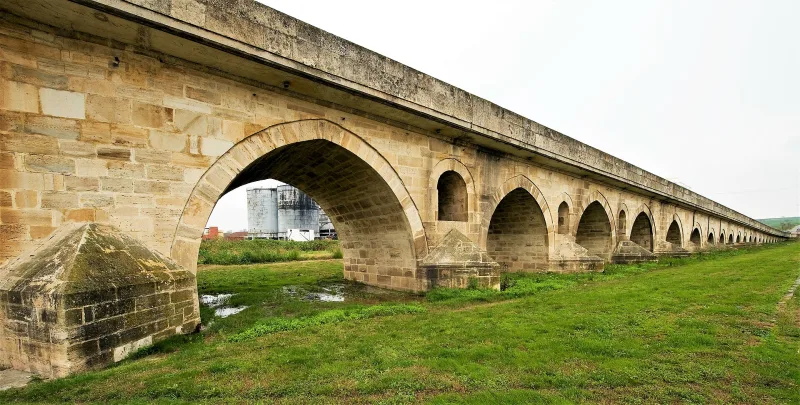
The statistics for Uzunköprü are still impressive. Upon completion, the bridge was 1,392 meters long and 5.24 meters wide, supported by 174 arches of various shapes—some pointed, some semicircular, varying in height and span. The largest arch spanned 14 meters. Several centuries of reconstruction and disasters reduced the number of arches to 172, with eight of them gradually sinking underground, leaving 164 visible today. The current restoration project aims to excavate some of the buried spans and restore the monument to its original appearance.
Carved figures and Seljuk motifs
The main decoration of Uzunköprü is the stone carvings on the piers and parapets. Among the figures, elephants, lions, and birds are recognizable; nearby are Seljuk-style ornaments, noticeable to an expert in the Ottoman decorative tradition. Some of the reliefs have been lost, and some were replaced during restorations; as a result, walking across the bridge today is like walking through a unique history textbook: in some places, there is 15th-century stone, while in others, there are later blocks installed after another earthquake. The Ottoman traveler Evliya Çelebi, who visited Uzunköprü in 1658, described the crossing as being “two thousand paces long”—an ancient metaphor that has taken root in local lore.
Balconies and Wave-Breaking Buttresses
A unique feature is the two balconies above the water, transforming the functional structure into a place for strolling. One is located above arches 40 and 41 and measures 3.4 by 0.4 meters; the other, noticeably longer, is above arches 102 and 103, with a length of 9.4 meters. They offer the best view of the river’s bend and the silhouette of the bridge itself. The piers still feature so-called selyaran—stone breakwaters that cut through the current during floods and protect the supports from erosion. This engineering innovation allowed the structure to survive several centuries of flooding.
Length, Records, and Measurements
The bridge’s dimensions have changed with each restoration. In 1978, it measured 1,266 meters; in 1989, 1,254 meters; and in 2018, specifically for the Guinness World Records, measurements yielded 1,306.2 meters. Despite this shrinkage, Uzunköprü remains the longest stone bridge in the world and the longest stone bridge in Turkey. For half a millennium, it also held the record for the entire Ottoman Empire: until 1973, there was no longer bridge in the country, and only the Bosphorus Bridge in Istanbul was able to surpass it.
Restorations of the 20th and 21st Centuries
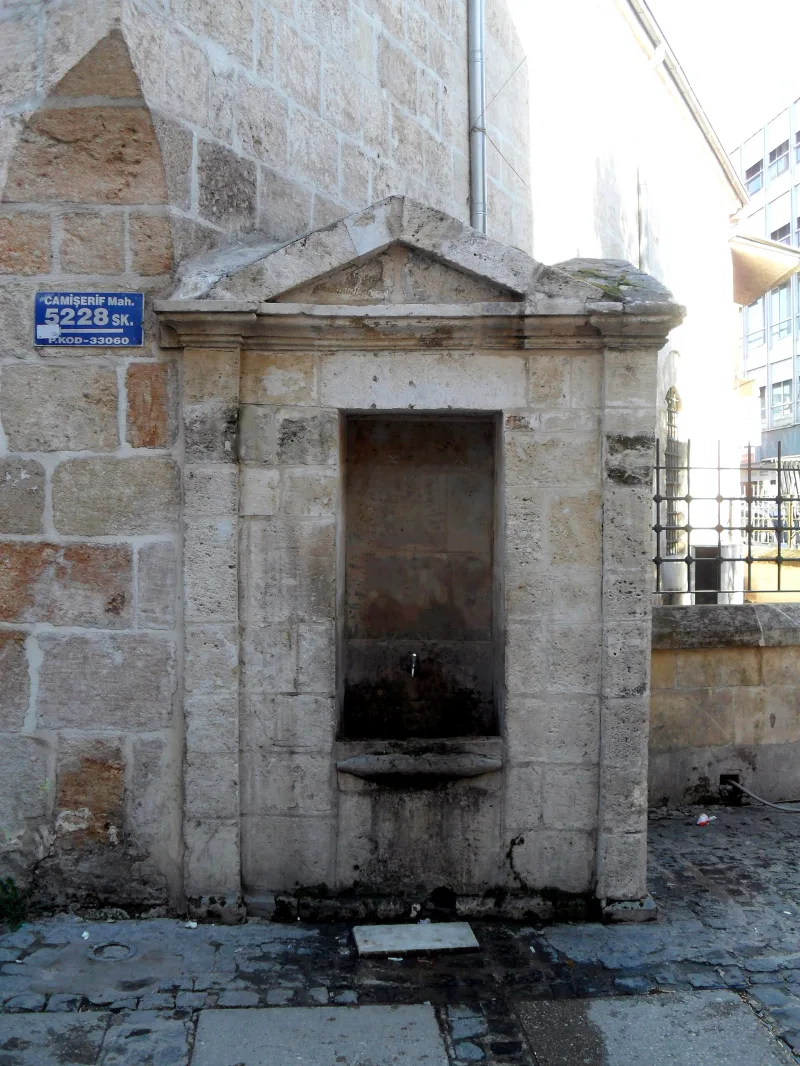
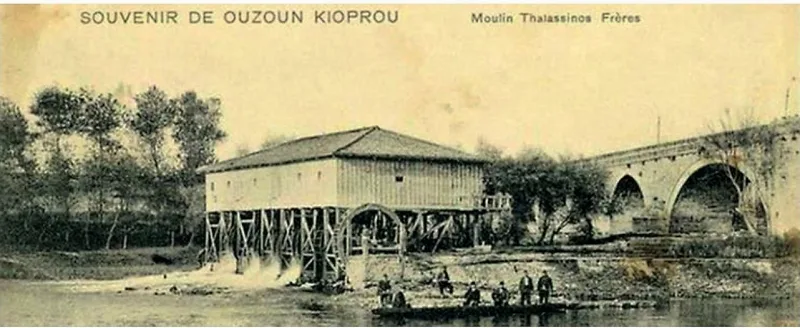
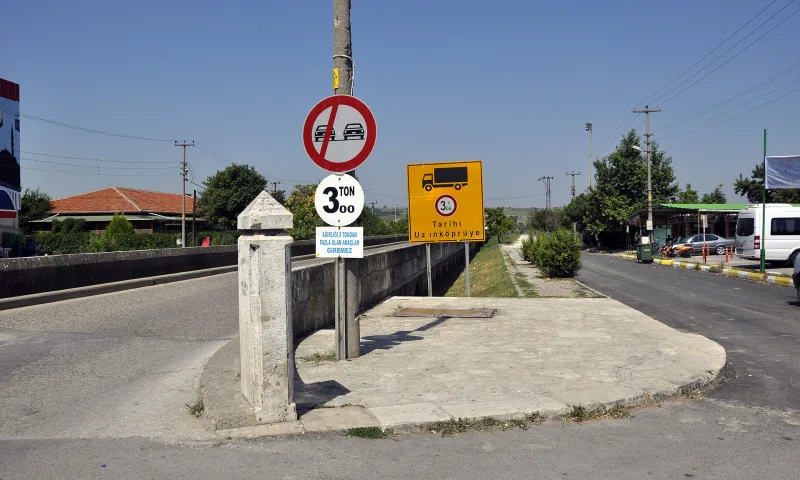
The first known repair took place in 1546, and the first major restoration in 1620. Earthquakes and floods in 1822–1823 destroyed four arches, which were replaced by three larger ones; in 1901, three more arches collapsed, and by 1904 they were replaced with two new ones. In 1908, the city authorities, without batting an eye, dismantled part of the bridge’s stones to build drinking fountains in Uzunköprü itself. From 1964 to 1971, the Main Directorate of Motorways widened the bridge by 150 centimeters—to 6.80 meters—and covered it with a 20-centimeter-thick steel plate with a concrete pour to allow for two-way traffic. This renovation provided a base for asphalt, but turned into a slow-motion disaster: heavy trucks damaged the historic masonry for years, and by 1993, the gaps between the stones had to be filled with mortar. It wasn’t until 2013, when a new reinforced concrete bridge opened a kilometer away, that heavy traffic was removed from the historic crossing, and in September 2021, Uzunköprü was finally closed to vehicles to be handed over to builders and restorers for three to four years.
Interesting Facts and Legends
- The name “Uzunköprü” literally means “Long Bridge”: first, the crossing itself was given this name, and later the village that grew up at its eastern end and eventually became a modern city.
- The grand opening in 1444 coincided with Murad II’s return from a campaign: the army’s triumph and the opening of the bridge across the treacherous Ergene River became a single story in the collective memory, and to this day, people in Edirne say that Uzunköprü “grew alongside the victory at Varna.”
- In 1718, the crossing was officially renamed Kasr-i Ergene, but the name did not catch on: as early as 1727, the French traveler Aubry de La Motte noted that local residents continued to refer to both the city and the bridge by their old name—Uzunköprü.
- In 2015, the bridge was added to UNESCO’s tentative list for cultural nomination; it has not yet been granted full World Heritage Site status, but the process has begun.
- In 2018, there were plans to feature a picture of Uzunköprü on the front page of the new Turkish passport—but the Ministry of the Interior mistakenly printed an image of the Meric Bridge next to it, leaving the caption “Uzunköprü”; this curious story instantly became a local meme.
How to get there
The bridge stands on the outskirts of the district of the same name in Edirne Province, 60 kilometers southeast of Edirne itself and approximately 230 kilometers from Istanbul. The most convenient option for Russian-speaking travelers is to fly into Istanbul’s IST Airport, take the metro and a bus to the Esenler bus terminal, and from there board a scheduled bus to Uzunköprü; the journey takes about three hours. An alternative is the train: historically, Uzunköprü was a border station before Greece, and a commuter electric train runs here from Edirne.
By car, the easiest route is to take Highway O-3/E80 to Edirne, then follow Road D.550 south toward Keshan. Previously, this highway ran directly across the historic bridge, but now it uses a new reinforced concrete bridge, opened in 2013–2015, located one kilometer away. It’s convenient to park at the city entrance from the old road: from there, it’s a five- to ten-minute walk to the approaches to Uzunköprü. Public transportation in Uzunköprü itself consists of dolmuşes and minibuses to the surrounding villages; it’s an easy 15-minute walk from the central square to the bridge.
Tips for travelers
The best time to visit is late spring (May) and early fall (September–October): the soft light falls beautifully on the gray-yellow limestone, and the water level in the Ergene is usually moderate, revealing the lower tiers of the bull’s head. In summer, it’s best to go early in the morning or at sunset—there’s little shade during the day, and the plain heats up to 32–34 degrees. In winter, the valley is often foggy; for a photographer, this is a blessing, but for a hiker, it’s a reason to dress warmer, as the wind from the Balkans is biting here.
Be sure to check the current status of the restoration before your trip: as of September 2021, the bridge is closed to traffic, and pedestrian access is periodically restricted in certain sections. The stated duration of the work is three to four years, but based on experience with major Ottoman restorations, timelines tend to shift. The best vantage points are the northern approach from the opposite bank of the Ergene (this is where the famous shot of the ribbon of arches stretching toward the horizon was taken) and the hillside southeast of the city. Bring a bottle of water, a hat, and comfortable shoes: the approaches to the bridge on both sides are well-trodden paths, with rocky sections in places.
It makes the most sense to combine your visit with a tour of Ottoman Edirne: the Selimiye Mosque by Mimar Sinan, the Bayezid II Complex, the Old Mosque, and the covered bazaar are all on the way from Istanbul and are worth a separate day. For lovers of engineering history, it is interesting to compare Uzunköprü with another long Ottoman bridge—the Mehmed Pasha Bridge in Visegrad, described by Ivo Andrić in *The Bridge on the Drina*; the parallel with Balkan literary bridges suggests itself here. And most importantly: this crossing should be approached without haste. The Uzunköprü Bridge does not demand that you rush across it with a camera—it reveals itself to those who stop, count the arches, and try to imagine how, over sixteen years, a one-and-a-half-kilometer-long stone road rose from this marsh toward the Balkans.